






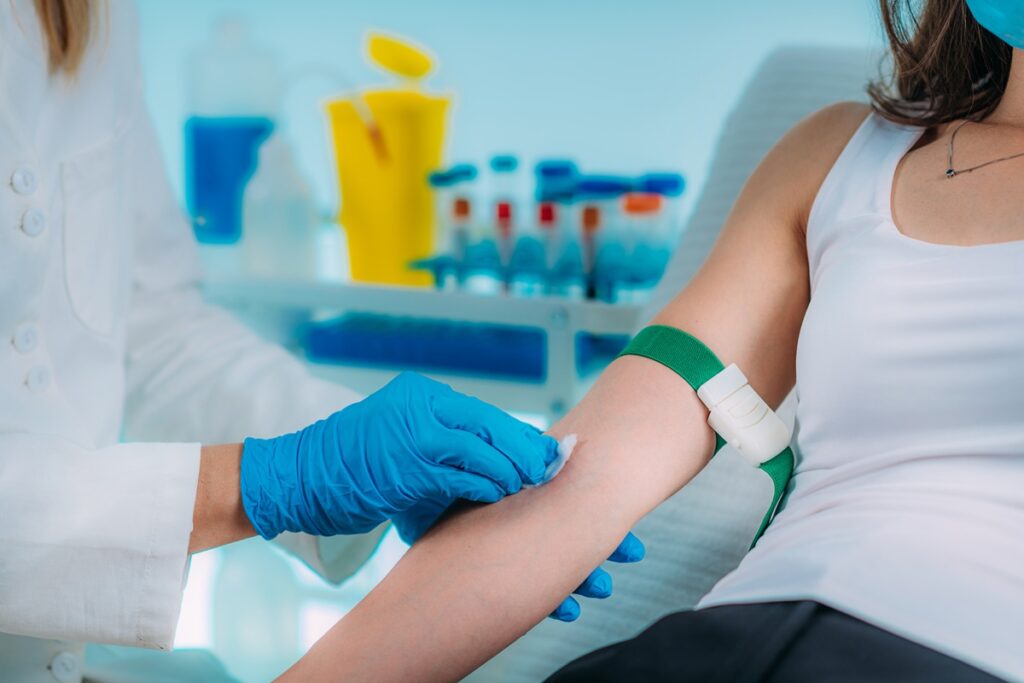
A blood test is a snapshot of what’s happening in your body right now. A DNA test is the blueprint you were born with, the one that never changes. One tells you where you are; the other tells you why you’re there. The honest answer is that you need both. But if you’re tired of guessing, start with the test that gives you answers your blood work can’t provide.
Start with the Test That Gives You Answers

You are sitting in your doctor’s office, holding a printout of your latest blood test results. Everything is “within range.” Yet you still feel exhausted, your sleep is off, and your weight won’t budge. It is a frustrating place to be, and it happens to thousands of people every day.
The blood test gives you a snapshot. It tells you what your body is doing right now. But it doesn’t tell you why.
That is where a DNA test comes in. It reveals the biological blueprint you were born with, the one that never changes. It answers questions your blood work can’t: Why does caffeine wire me while my friend sleeps fine? Why do I crave carbs after stress? Why do I need more sleep than others?
Here is the truth: both tests are powerful. But they serve completely different purposes. And if you are serious about your health, you need both.

What a Blood Test Tells You (And What It Misses)

A blood test is a snapshot of your body’s chemistry at a single moment in time. It measures:
- Hormone levels – thyroid, cortisol, oestrogen, testosterone
- Nutrient markers – iron, vitamin D, B12, folate
- Metabolic indicators – blood sugar, cholesterol, triglycerides
- Inflammation markers – CRP, ESR
- Organ function – liver, kidney, thyroid
This is valuable. It can catch deficiencies, identify imbalances, and track how your body is responding to treatment.
But a blood test cannot tell you why those imbalances exist. It cannot tell you if you are genetically predisposed to poor sleep, slow metabolism, or stress sensitivity. It cannot tell you if your body struggles to convert T4 to T3, or if your cortisol rhythm is genetically wired to peak at the wrong time.
It is also a moving target. What you eat the night before, how much you slept, or even the time of day can change your blood results. That is why your doctor often says, “Let’s test again in three months.”
Be sure to read about the anger you can’t control? It could be your thyroid
What a DNA Test Tells You (And Why It Never Changes)

A DNA test is different. It looks at your genetic code, the instruction manual you were born with. That code does not change. It reveals:
- How your body processes food – carbs, fats, proteins
- How you respond to stress – cortisol regulation, COMT gene
- How you sleep – circadian rhythm, sleep quality genes
- How your thyroid functions – conversion, sensitivity
- How your hormones behave – oestrogen metabolism, testosterone production
- How your body detoxifies – phase I and phase II detox pathways
- What supplements actually work for you – based on your genetic variants
The YOLO Health DNA Health Package (£299.99) covers all of this and more, over 800,000 genetic markers that give you a complete picture of your unique biology. Unlike a blood test, your DNA does not change based on what you ate for breakfast or how much you slept last night. It is a fixed, reliable map of your body’s natural tendencies.
Where They Overlap (And Why the Honest Answer Is Both)

This is not an either/or question. The honest answer is that a DNA test and a blood test work best together. A blood test tells you what is happening right now. Your vitamin D is low. Your TSH is high. Your cortisol is elevated.
A DNA test tells you why. You have a genetic variant that makes it harder to absorb vitamin D. You have a thyroid gene that affects T4-to-T3 conversion. You have a COMT variant that makes your stress response slower to recover. Together, they give you a complete picture: what is happening, and how your body is wired to handle it.
That is why YOLO Health offers both DNA testing and blood testing through its partner network. The DNA test gives you the blueprint. The blood test gives you the current status. Used together, they give you the power to make informed, personalised decisions.
Which One Should You Get First?

If you are trying to understand a chronic issue- fatigue, weight, sleep, mood- start with a DNA test. It gives you the foundational information you need to understand your body’s design. Then, use a blood test to see how your current lifestyle is affecting that design.
If you are tracking a specific condition- thyroid disease, diabetes, anaemia- a blood test is essential. It tells you if your medication is working or if your levels are shifting.
But if you are tired of guessing, frustrated with generic advice, and ready to understand why your body behaves the way it does, the DNA test is where you begin.
The Bottom Line
A blood test is a snapshot. A DNA test is a blueprint. One tells you where you are. The other tells you why you are there. The honest answer is that you need both. But if you have to choose one, choose the one that gives you the answers your blood work can’t provide. Your DNA holds the keys to your health. Unlock them with the YOLO Health DNA test.
Frequently asked questions
DNA Test vs Blood Test: Which Tells You More?
What can a DNA test tell me that a blood test can’t?
Can a DNA test replace a blood test?
How accurate is a DNA test?
Which test should I take first?
